



The territorial village of Montezuma had only recently changed its name to Winona, and a county jail made of logs was still under construction.
The current topic of conversation in Winona County when Jacob Weissbrod launched his new brewery was the forthcoming draft of a state constitution.
In Winona, beer comes before a lot of things.
Weisbrod‘s original brewery opened in East Burns valley in the fall of 1856, but it wasn’t long before demands of the beer-loving community overwhelmed the productive capacity of the original plant. So Weisbrod built a bigger and better brewery.
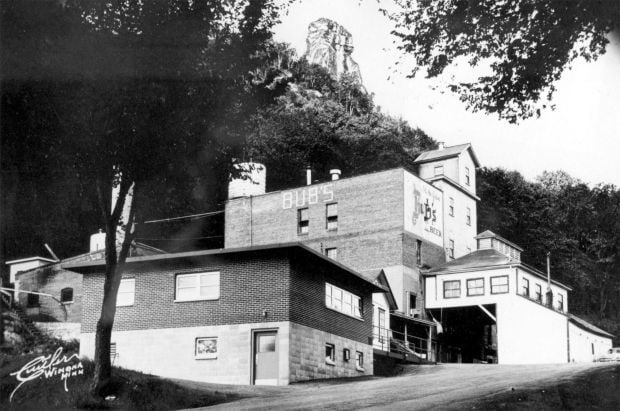
He moved his vat and kegs to the foot of Sugarloaf, where aging caves could be hewn into the solid rock of a mountain. In the spring of 1862, the year much of the town burned down, he kegged his first brew on the spot that would mean beer to Winonans for the next century.
People are also reading…
Seven years later a Bavarian immigrant, Peter Bub, took a job at Weisbrod's as brewmaster and foreman. It was a good move for the young man.
A year later Weisbrod died, and Bub took over as manager.
A year after that he married Weisbrod‘s widow and named the brewery after himself.
The next year the place burned down.
A thirsty city watched with eager interest as a new brewery went up in the shadow of Sugarloaf and gleefully toasted its reopening so often that output increased 20-fold -- from 500 to 10,000 barrels a year.
To find room to age this flooding river of lager, Bub looked below his feet and set to work burrowing into the solid rock at the base of the hill. For centuries, European brewmasters had aged beer in caves where the constant cool temperatures brought the brood to the peak of drinkability.
Not having a cave handy, Bub built not one, but six, each about 25 feet by 50 feet with a steady year-round temperature of 45 degrees.
In 1911, Bub -- the man who made it fun to be thirsty -- died.
His son-in-law took over the business, and would continue the family tradition until he died in 1941.
Prohibition was a great inconvenience to America's brewers, Bub's among them. For 13 years the brewery below Sugarloaf hill made soda pop and turned out beer without the alcohol.
The law of supply and demand being what it is, other enterprising individuals manufactured the alcohol -- with illegal steals in the dark of the night -- and left it up to the patrons of soft drink parlors throughout the city to surreptitiously marry the near-beer and moonshine to get them through 13 hot, dry summers.
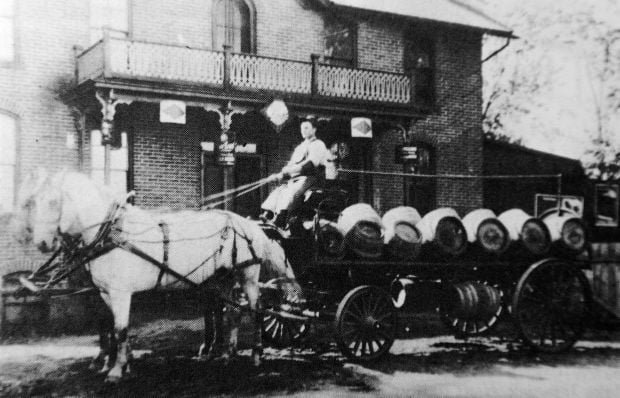
After prohibition was repealed in 1933, Bub's went back to making beer -- and made it more convenient for thirsty people with places to go by putting the beer in bottles. Prior to prohibition, Bub's beer was sold only in kegs, but during the country's long dry spell, Bub's installed bottling equipment for pop and near-beer. After repeal Bub's simply ran its traditional product through the equipment when production resumed.
Bub's survived prohibition, but many other small brewers did not. Annual production reached a peak of 30,000 barrels, but Bub's, like other local and regional brewers throughout the country, found it ever more difficult to compete with the brewing conglomerates.
Bub's final blow came with the passage of the Occupational Safety and Health Act. Applying OSHA standards to the venerable brewery posed a financial challenge the brewer couldn’t overcome.
In 1969, 100 years after Peter Bub brought his first batch of beer to Winona, Bub's taps went dry for good.


