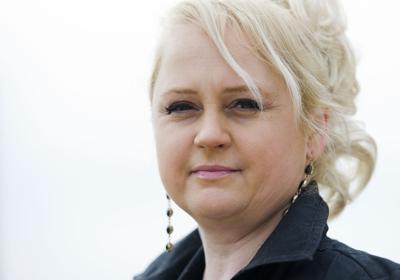

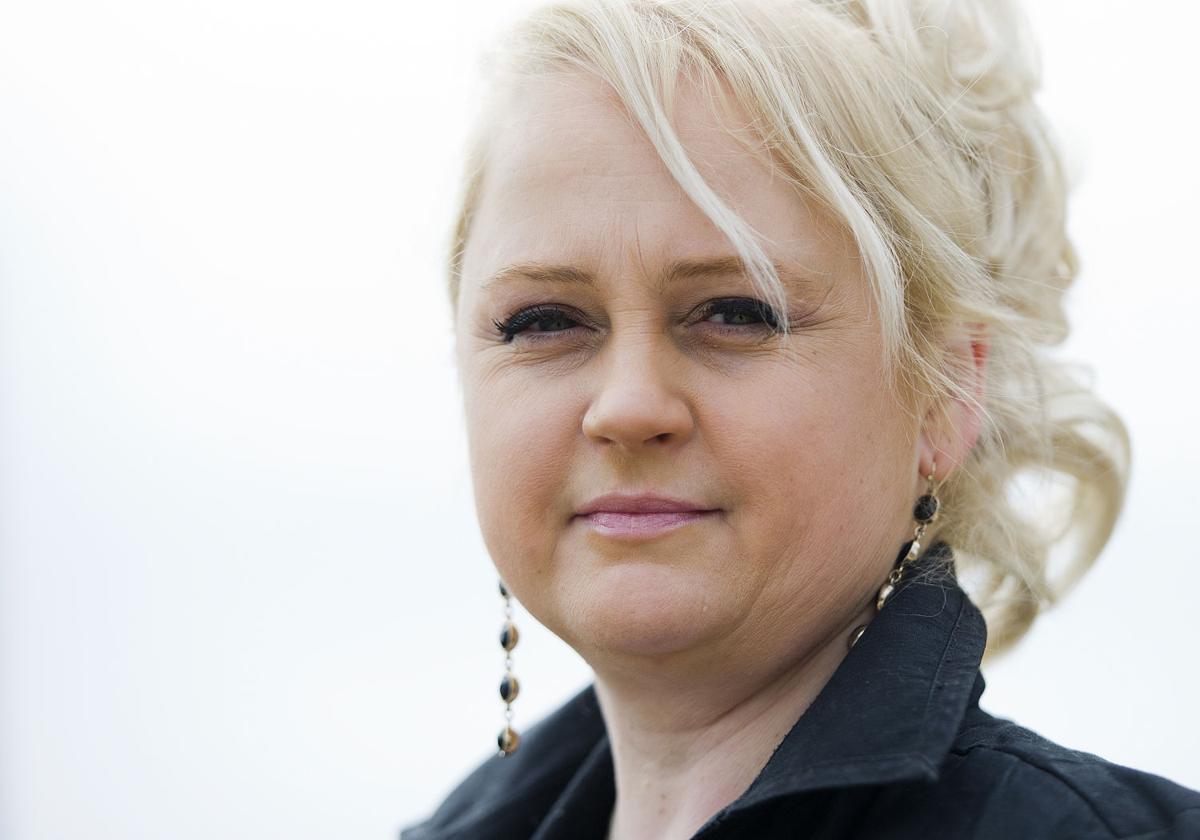
Winona resident Olga Dedkova is an intelligent, hard-working Russian woman who adores history and culture and uses her studies to deepen her understanding of both her past growing up in different countries, and her present and future living in the United States.
Olga’s story began in Turkmenistan, where her parents were scientists at the Repetek Biosphere Nature Reserve. They studied the ecosystem and biology of the Karakum Desert, which translates as “black sand.” The pair fell in love, married and had Olga in 1973. The family stayed at Repetek until she was 6, which is the age in Russia when all children are required by law to attend school.
Her parents chose to leave the desert and move west to Kaliningrad, a Russian enclave on the Baltic Sea northeast of Poland. Olga grew up in Kaliningrad and attended school there. Her family lived with Olga’s paternal grandmother while her father continued processing his gathered research material and working on his doctorate, as well as serving as the chairman of the Kaliningrad State University’s biology department. Her mother worked for the Russian Baltic Fleet as a meteorologist, analyzing weather maps to ensure the safety of military training at sea.
People are also reading…
Olga was raised largely by her grandmother, because her parents often were working. Her grandmother grew up an orphan in a small Russian village. Later she married a military field-surgeon with whom she had three children. Her husband died of cancer shortly before Olga’s family moved in.
She shared with Olga many of her war stories, including how Kaliningrad became a part of Russia after World War II. Olga excelled academically and was working on completing her undergraduate degree when her grandmother died. Olga finished her degree, in philology, a multidisciplinary degree that focused on a teaching major in English and minor in German.
In August 1995, Olga traveled to the United States at the age of 21 to pursue her master’s degree in English at Winona State University. It was a challenge to adjust to life in Winona, as the culture was much different. Everything from the values to the health care system was a change. Her first winter break was especially tough, as everyone at the university left, and she felt alone.
School brought challenges, too. She struggled to adjust to the college quarter schedule, and she discovered that the English she learned in Russia wasn’t American English — she had learned it from British teachers. Word choices were different, and there was less of a focus on writing and composition.
“Composition structure differs from country to country and deeply reflects cultural values of any given society,” she said. “Here in America, one gets to the point in a few sentences, since time is money; you have to adopt a crystal-clear approach when you write. In Russia, you stay away from telling the point as long as you can … you beat around the bush, adding lots of nice allegories, taking your sweet time until you get to your point.”
Soon after her arrival at Winona State University, Olga met a student from Bangladesh. They began to date, and life changed quickly during her second semester in college, when Olga learned she was pregnant. The couple married in summer 1996, a simple city hall wedding where they exchanged rings they had purchased together for $70.
They had little time to celebrate. He was an engineering student; she a literature student. After a friend took them out for a nice dinner to celebrate their wedding, they were up early the next day — she had a comprehensive exam, and he had major lab work to complete.
Olga and her husband earned their separate degrees while raising their son. Olga entered a teaching program at WSU to add credentials to her degree. In 2004, she got a full-time job working with students at Arcadia High School in Wisconsin. She also became involved with Project FINE as a Spanish and Russian interpreter. Her husband, meanwhile, found work at an automotive parts manufacturer in the area.
They also each began working on becoming U.S. citizens, a long and careful process that took Olga about 15 years. “I did not want to cut any corners or have any issues,” she said. “If I am going to do it, then I am going to do it properly.”
The burden of starting a new life from scratch, without family support, while working full-time and raising a child, led to stress for the young family of immigrants. Olga and her husband divorced in late 2009, and he moved to the Twin Cities. In spite of the split, they were committed to co-parenting and providing for their son.
Meanwhile, Olga experienced success professionally, working as a Spanish teacher, English as Second Language teacher, and her current position of coordinating the school’s ESL program. In many ways, she said, her job is to be “a success coach for some of the students.”
“My school is my family,” she said. “I treat each of my students as if they were my very own. I have nothing but their best interests at heart.”
While in America, she has stayed closely connected to her parents. Learning about their achievements gave her comfort and served as inspiration for Olga. Her father, now dean of the biology department at Kaliningrad State University, opened a springboard school for students interested in medical professions within the department. He also recently published a book about endangered regional plants. Her mother, meanwhile, became deeply connected with religion after the fall of the Soviet Union allowed more freedom of expression and churches to flourish. Both of her parents have been engaged in her and her son’s future.
Reflecting on her journey and life in the United States, Olga said, “This is the land of opportunities, so I wanted to give my child everything that this country has to offer. He is the first generation American in our family, and he represents something bigger than just being a child.”
Olga is proud of her son for pursuing big dreams, and her decision to come to the United States is what allowed her to give him the necessary resources to do so, she said. That, in her eyes, is both her biggest achievement and her own success story.
“In spite of all the hardships, I have given my son the most powerful support anyone can think of — unconditional love and support,” she said. “I wanted him to know that no matter what happens in his life, through the highs and lows, he will always have me as his biggest fan.”
Once her son becomes independent, Olga has new plans to continue building her own life here. She wants to accomplish the many goals on her bucket list in the near future, including taking piano classes, polishing her French and traveling around the country.
“I kept a list of goals,” she said. “It is a huge list, and whether or not I will be able to get to all of it, I will have plenty to keep myself busy, that is for sure.”