


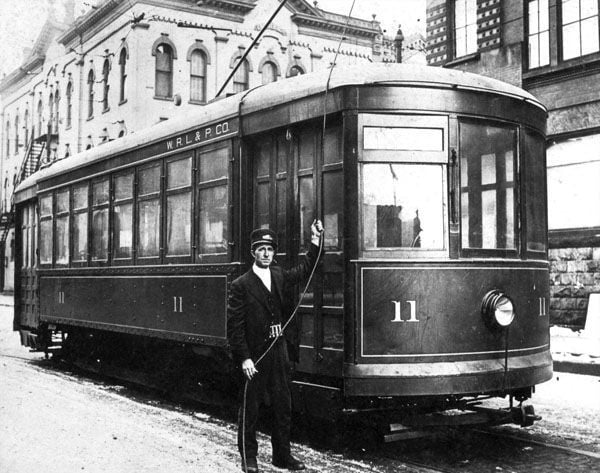
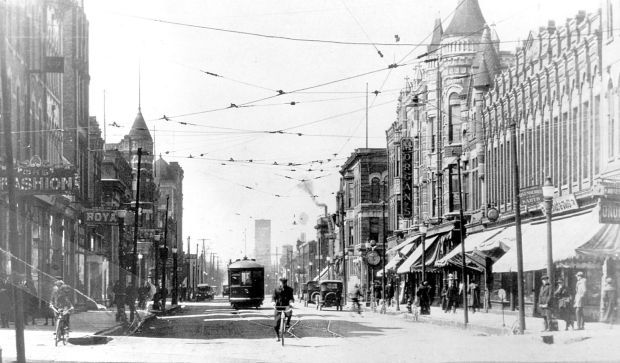
When the electric trolleys were replaced by moto rbuses in the fall of 1938, Winona teenagers were deprived of one of their most fruitful sources of year-round entertainment.
For more than 40 years after the first electric streetcars were placed in service here, successive generations of Winona youth constantly sought new ways of jolting the trolley from the overhead powerline, weighing down one end of the car so that the front wheels would be raised off the tracks or “shagging" rides.
In this running contest between mischief-makers and the streetcar operators it was not uncommon for a motorman to stop his car midway on his run to dash off in pursuit of some prankster who had placed the small explosive charge on the tracks or had stalled the streetcar by unhitching the trolley.
The first street railway system in Winona was established in 1883 and scheduled runs with horse cars were instituted on Christmas Day.
People are also reading…
The first iday's operation was somewhat hampered by a heavy snowstorm the night before, and the routs run were limited to a portion of one line from which the snow at been cleared.
The first cars operated from the Winona Street Railway Company stables at East Third Street and Mankato Avenue to the Wagon Works on West Fifth Street.
Because of the snow, however, most of the first runs were made only from the post office downtown to the Fourth Street terminal, although one car did manage to push through the snow along the entire length of the line.
The horse cars were received with great enthusiasm and on the first days of operation the cars were filled to capacity on each trip.
The Winona Republican the following day lauded the Street Railway Company's accomplishment and noted that the new system “toned up Winona‘s metropolitan appearance in fine style.“
Stables for the horses used in the system were “designed with a view to the humane treatment of the horses as well as the convenience and comfort of the employees“ the editorial writer continued.
The staples were equipped with 36 stalls and there was an adjacent car house with room for 14 cars. Equipment for switching cars from one track to another one also was housed in the car barns.
The railway system began operations with the new carriages recently manufactured in St. Louis and iron snow scrapers were devised to aid the progress of the cars in the winter months.
Winona was served by the horse cars for nearly 10 years, but during the latter period increasing thought was given to the possibility of inaugurating an electric railway system.
The construction of a power system, tracks in the acquisition of equipment for such a project was begun in 1891, but the work was hampered by a number of delays.
After several postponements, the first electric street cars were placed in service on Jan. 21, 1892.
Lack of trained personnel limited the operation to only two cars on the inaugural runs, but a third car was added when the training of motormen and conductors had been completed.
The passengers on the first run were governmental dignitaries and representatives of the press.
At 2 p.m. the first electric streetcar, decorated with flags and bunting, moved up Third Street and stopped in front of the Slade Drugstore.
The mayor Michael Toye, council president John Keenan, other members of the city council and Senator J. A. Tawney boarded the car. The operator was Frank Wood who had been brought here from St. Paul to direct the first day's operation.
The westward trip to the Wagon Works was described as “one of triumph quote and took 10 minutes."
The return trip was not quite as triumphant. When the car reached Second Street one of the switches failed to operate and the alderman could not be taken over the remainder of the line. Later in the day, however, the switch was repaired and the regular runs were made.
In later years the west line was extended across Lake Winona.
The cars continued west on Howard Street to Dacota Street where southbound turn was made. The trip across the lake to a point near the Woodlawn Cemetery was made on a wooden bridge.
To stimulate increase patronage of the system, the streetcar company, for several years, offered free outdoor moving picture's on the south side of the lake.
By paying the five-cent fare a person could ride across the lake, witness the movie at the south terminal and then return to Winona.
The line also provided transportation for persons visiting Woodlawn Cemetery.
At one time, children waited on the north side of the lake for the approach to the car streetcar and if the motor man was in a generous mood and there were no other passengers the kids were given free rides across the lake.
This practice was abolished after one free riding youth was seriously injured while the car was being turned on the south side of the lake.
There were several other accidents on the lake portion of the line, and it was not long after a train struck a trolley at the Dacota Street crossing fatally injuring three persons that this segment was discontinued.
The capacity of the streetcars was taxed on days when the circus was playing here or when baseball games were scheduled.
On these days special open trailers were attached to the rear of the cars and towed along the run to provide transportation for larger numbers.
Frequently the trailers would jump the tracks that are switching point at Olmstead Street.
When this happened all of the passengers would get out and help lift the trailer back on the tracks so the trip could be resumed.
The street railway system was installed by Winona Railway and Light Company, and was re-organized several times until the firm was absorbed by the Mississippi Valley Public service Company.
The service company operated the street cars and made the conversion to motorbusses until the utility was taken over by the Winona Transit Company in 1944.


