


Original publication date: July 20, 2003
Fifty years ago there were 60 grocery stores in Winona.
Twenty-two of them were east of Bloedows at 451 E. Broadway.
Now there are four major grocery stores, not one of them west of Central School at 317 Market St.
In the world of buying and selling, very little stays the same for very long.
Not even in Winona.
Iowa State University economist Kenneth Stone has made a career of studying retail trends in the rural Midwest, and has charted the impact of national mass-merchants on Main Street, from the Sears catalog to Wal-Mart Supercenters.
Wal-Mart, he points out, isnt the first accused of being the bully on the block.
People are also reading…
Mail-order merchants such as Sears and Montgomery Ward, according to Stone, were the first national mass-market challengers to small-town retailers.
In the 1800s B.S. Before Sears a shopper in a small town or city had no choice but to do business with the local merchant on Main Street, and pay whatever that merchant chose to charge. Then Richard W. Sears with a 500-page wish book and the slogan Shop Sears and Save challenged small-town storekeepers who featured a limited selection and 100 percent markups. With low prices, Sears offered a virtually limitless stock and the convenience of shopping from the kitchen table.
Across the country, Main Street merchants squealed like pigs poked in the profits.
But shopping from a catalog just isnt the same as the real thing.
Time was, if you wanted to go to a big store, you had to go to a big city. New York had Macy's, Chicago had Marshall Field's, and a trip to Winona meant shopping at Choate's or R.D. Cone's.
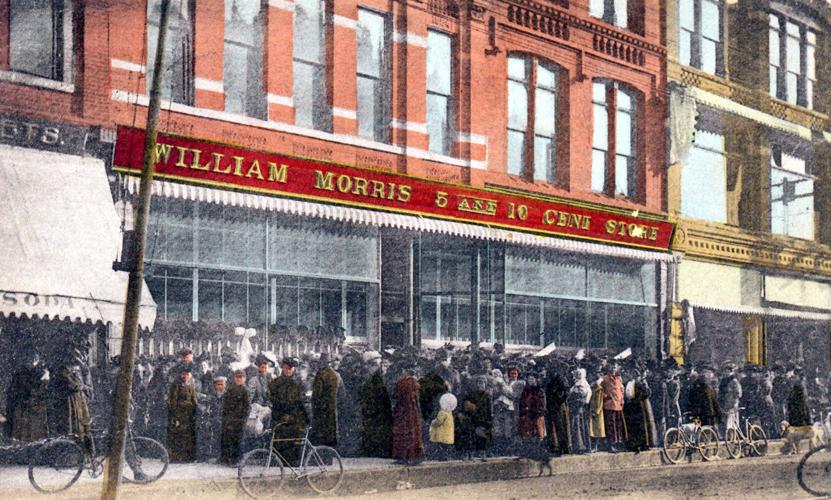
But the automobile brought them in from the farm, and it wasnt long before national chains Woolworth's, Penney's, Grant's and Kresge's were locating in towns and cities long maintained as virtual monopolies by local storekeepers.
In Winona, retailers have played with the big boys for a long time.
As a regional retail center, Winona was and continues to be attractive to national retailers, but the mix of independent and chain retailers and where they are located has changed dramatically over the years.
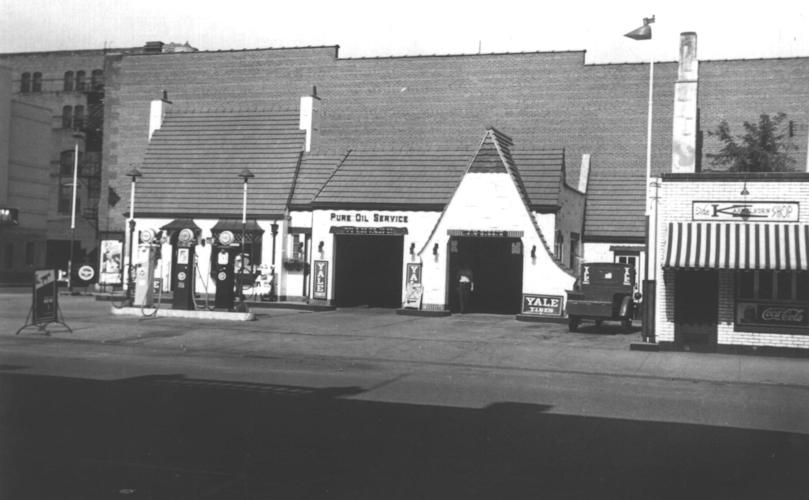
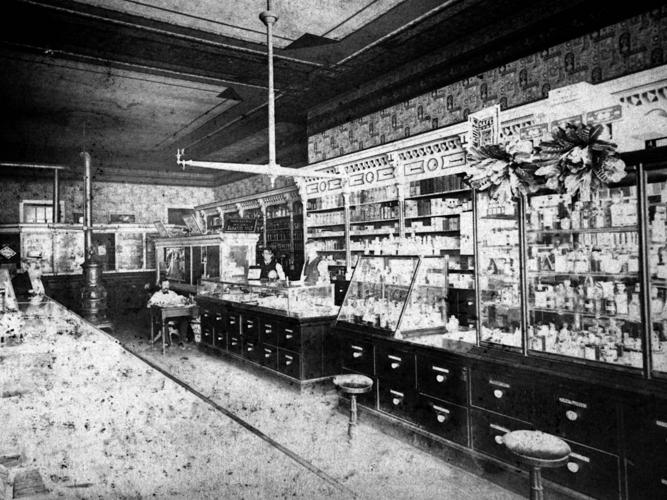
Fifty years ago, shopping in Winona meant shopping downtown. Eight department stores lined Third Street, anchored by Winona's own H. Choate and Company. Two other local stores, Salet's and Bailey and Bailey, did business downtown, along with Ward's, Penney's, S.S. Kresge, F.W. Woolworth, and W. T. Grant. The six pharmacies listed in the 1953 city directory were all locally owned. There were six large grocers doing business along with more than 50 mom and pop neighborhood grocery stores and butcher shops. The city had 36 gas stations, but relocating Hwy. 14/61 from Sarnia Street to the south side of Lake Winona was still four years in the future.
Ten years later, the four-lane was in and Winona's first strip mall was open, with Randall's foods, Westgate Drug and a hardware store competing with downtown Winona. The city had added six gas stations but nearly half of its small grocers had closed their doors. At the same time, three more larger food stores opened, most of them affiliated with a national or regional chain National Tea, A & P, I.G.A., Red Owl, and Piggly Wiggly.
By 1966, Winona Mall joined Westgate along the four-lane highway. Wards moved from downtown to the mall, and the downtown Gamble's store closed in favor of a Tempo store at the mall.
In five years, J.C. Penney moved out of downtown to its present location on the highway. The new Penney's would be the last free-standing Penneys store to be built, as the company shifted its location strategy to the enclosed shopping malls opening in cities across the nation. Gibson's, a regional discount store, was open in the Westgate mall, offering additional competition to downtown Winona.
The new Penney's complex included a major grocery store, joining Albrecht's Fairway in the mall, Randall's in Westgate, and the new Red Owl on Service Drive only a few blocks west in Goodview in the rapidly growing Hwy. 61 retail strip.
Over the next 30 years, the migration of large-scale retail activity from downtown Winona to the highway accelerated dramatically and decisively. By 1980, Kmart was open next to the mall. ShopKo opened across from J.C. Penney. Fleet Farm opened a 158,000-square-foot mega-store on east Hwy. 61, and a few years later, Target opened nearby at 860 Mankato Ave. In April, Menard's opened at 1075 Frontenac Drive, virtually casting a shadow on both Fleet Farm and Target.
Meanwhile, in downtown Winona, Choate's closed forever and Spurgeons left town. W.T. Grant Co. went bankrupt. Kresge's and Woolworth's closed their stores as well, leaving downtown Winona without a single, large general merchandise retailer.
The grocery business changed equally dramatically. In 1971, there were still 22 grocery stores operating in the city. Today, there are five grocery stores, two of which, Midtown Foods and Country Market, are under the same ownership. And there are 13 convenience stores distributed among three owners.
And of the 42 gas stations operating in 1963?
Two are left.


