


From the Winona Daily News Centennial Edition, Nov. 20, 1955.
The last five years have witnessed a revival of early day activities at the railroad shops operated here for more than half a century by the Chicago and North Western Railway.
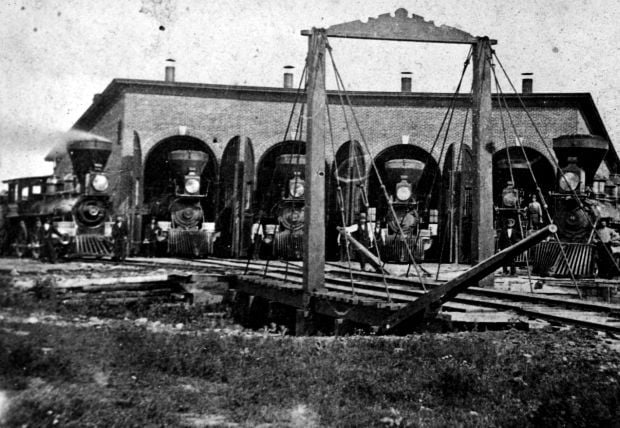
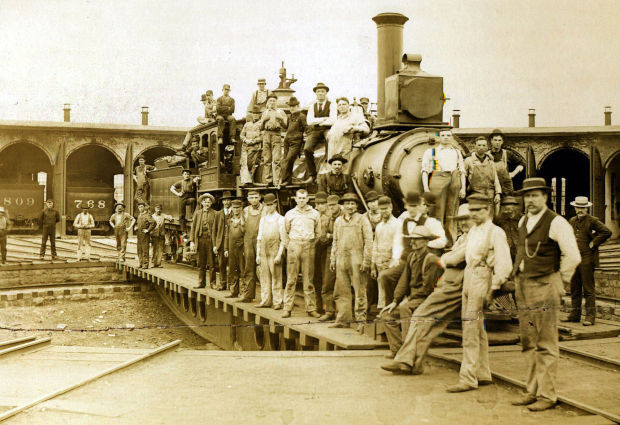
First shops of the Winona and St. Peter were erected here about 1866 and the first steam locomotive repaired July 23, 1886. It had been in operation for 22 years and wasn’t scrapped until Oct. 28, 1910. About the mid1900s, fire destroyed the roundhouse and blacksmith shop and the present roundhouse was erected. The blacksmith shop was discontinued.
Purchased from the Winona and St. Peter Railroad June 7, 1900, the shops soon became a major North Western operation. The locomotive shops here assumed all engine works of the division and the car shops at once began installation of safety appliances in compliance with federal regulations. The so-called “safety” appliances (now standard equipment) included hand holds and proper running boards.
People are also reading…
The car shops also made ballast cars for hauling rock and later turned to repairing passenger and freight cars. First of the major rebuilding programs began shortly after 1900 when the shops launched a project to rebuild hopper, box and flat cars from throughout the C&NW system. Box car production also was added and about 1915 the shops began making 1,000 cars. Employment hit an all-time high of 500.
After that was completed, however, employment at the shops sagged, hitting a low of 70 in the motive shops and 30 in the car department in May 1949.
Winonans became alarmed when one of the city’s once great industries was on the verge of a virtual complete shutdown and business leaders in the city sought to influence the railroad to resume heavy activities here.
Early in January 1950, the railroad decided to restore car repair operations as soon as finances permitted in the hope that the car shops could resume year-round operations. They also mentioned the possibility of establishing a diesel engine repair branch here as part of the road’s extensive dieselization program. And there was some mention of reactivating the wheel shop that had closed in 1937.
Employment gradually increased in preparation for these programs until the diesel maintenance program began here in1953. In March, the C&NW purchased 101 diesel locomotives at a cost of $16,000 to $200,000 (largest mass order in history) and conversion of the Winona shops from steam to diesel maintenance began. In September 1953, a special “school car” arrived at the Winona shops to instruct workmen in diesel maintenance.
Some of the shop’s work today still is devoted to repair of the steam engines the railroad uses on suburban Chicago runs, but more than 80 percent of the work is concentrated on diesels.
Reactivation of the wheel shop was accomplished in the fall of 1953. Erected in 1925, the shop at one time was an important part of C&NW operations. It has resumed that position today. Two types of freight car wheel processes are included in the operation here. In one of the buildings, a huge mounted wheel journal lathe can return defective wheels to serviceable condition without removing wheels from the axles. Each wheel weighs about 750 pounds, and the axles weigh half a ton.
Work here consists mainly of smoothing the rough journals, which are extensions outside the wheels to which springs and other supports are attached. A rough journal may cause a “hot box,” putting a car out of operation.
The other process at the wheel shop is for complete processing of both wheel sand axles. Wheels are removed from the axle by a 300-ton hydraulic wheel press after which wheels go to a boring lathe for reboring to fit axles processed on one of the shop’s two axle lathes. A micrometer is used to ensure absolute accuracy in the lathe operations.
The diesel maintenance program and reopening of the wheel shop brightened the employment picture at the shops, but the most important project in the five-year period didn’t come until the fall of 1954.
In October 1954, the Chicago and North Western inaugurated a car rebuilding program at the Winona shops that increased car department employment by about 124 (to 240) for a full year. It boosted total shop employment over the 400 mark.
The huge program included rebuilding of 480 hopper cars (12 more were being finished this month), rebuilding 20 cars for transporting wood pulp and converting 16 Pullmans as work cars“rolling dormitories” for railroad crews.
The one-year program cost the railroad $2,633,697. One of Winona’s newer industries benefited from the rebuilding program. That was the Miller Lubricator Co., which manufactures a new type of journal box lubricator. The muff-shaped lubricator was installed in each of the eight journal boxes on every car rebuilt here during the program.
And with this program nearing completion, officials of the lines have announced that it won’t signal the need of major projects at the Winona shops. Plans already are under way for conversion of standard to work equipment, construction of special equipment (including damage free box cars) and extensive repairs to various types of other cars.
About 90 men were laid off as the car rebuilding program neared completion his summer, but 50 are being recalled as the shops begin a regular work cycle. Employment today is about 350 in the motive and car shops.


