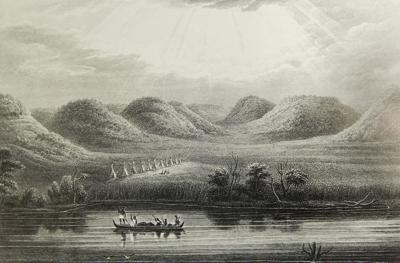

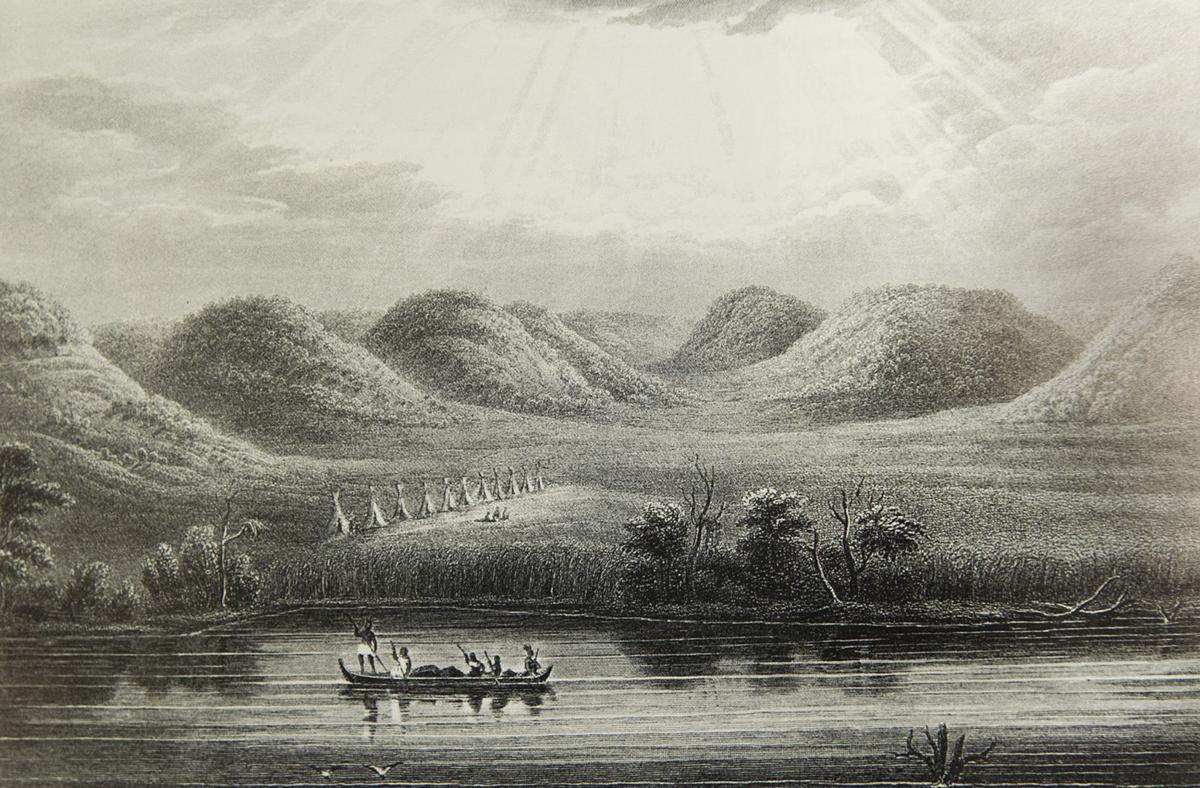
Irwin Johnson laid claim to Chief Wabasha’s back yard, and the chief wasn’t entirely pleased.
He and the other chiefs of the Dakota may have signed the Treaty of Traverse des Sioux and the Mendota Treaty, but Congress had yet to ratify the agreements and, by law, Wabasha’s Prairie was still Wabasha’s.
And in the autumn of 1851 there were a lot more Indians on the prairie than white people.
In late May, a delegation of Dakota made the round of the dozen or so settlers, demanding a barrel of corn flour from each claim.
Refuse, and the claim shack would be put to the torch.
As a simple and effective system of tax collection, not even the IRS has been able to match it.
Just over two months before the first claims were laid on the land that was to become Winona, the Dakota chiefs signed away legal claim to more than 21 million acres in southern Minnesota and north Iowa for roughly six cents an acre.
People are also reading…
The Dakota themselves were relative newcomers to Minnesota and the Mississippi Valley.
Pushed out of northern Minnesota by the Chippewa, who were in turn pushed west by encroaching white settlement.
The Mdewakantonwan Dakota moved south along the Mississippi in the late 1700s to early 1800s.Wabasha I’s band of Mdewakantonwan settled near the mouth of the Upper Iowa River between 1780 and 1785.
Wabasha I was the first of three chiefs who would figure in early history of southeast Minnesota and the Winona area.
By tradition, Wabasha was the son of a Chippewa woman and a Dakota father.
When war came between the two peoples, his mother returned to her own tribe and, in time, bore a second son, Wabojeeg, who, would face his half-brother in battle.
The old Wabasha gained fame and respect when he offered his own life in atonement for the murder of a British trader by one of the band.
Impressed, the British honored him with a military uniform, military hat and medals, earning them a lifelong ally in their struggles against their erstwhile colonists.
Old Wabasha died of cancer in 1806 at his camp at the mouth of the Root River.
His son, Wabasha II, had already assumed leadership of the band.
In the exhaustive accounts of his 1805 expedition up the Mississippi, Zebulon Pike makes no report of Indians living at the sandbar that would in less than 50 years be the growing settlement of Winona, but Steven Long, who explored the area in 1817, reports a well established Dakota settlement at Wabasha’s Prairie — referred to among the Dakota as Keoxia.
Wabasha II enjoyed a reputation as a man of peace.
Although he sided with the British in the War of 1812, he grew disillusioned when they failed to halt the encroaching American settlers.
In 1836, one of the legacies of the white invasion visited itself with particular fury on Wabasha’s village.
A smallpox epidemic swept through the lodges at Keoxia, nearly wiping out the band, leaving the third Wabasha to lead the remnants of the people.
By 1850, about 300 men, women and children were living in Wabasha’s village.
The lodges were spread out over much of the treeless sand prairie, with the entire area used by the Dakota stretching about nine miles along the river and three miles toward the Minnesota bluffs.
Four large lodges, each housing about 70 people, were in the area of today’s Pelzer Street and Riverview Drive.
These lodges were primarily used during the summer, with the people moving to the shelter of wooded islands in the river during the winter.
East of Prairie Island Road, spreading across the prairie in the direction of the lake, was a great burial ground, occupying more than 10 acres.
It was the Dakota custom to place their dead on scaffolds, exposed to the sun and rain, to decompose, eventually burying the bones.
Religious and ceremonial grounds were west of the burial grounds.
Gardens and farm fields were farther south, reaching almost to Gilmore Valley.
When Johnson and the other early settlers staked their claims in late 1851 and early 1852, they formed a tight community well to the east of the Dakota lodges, huddling on the riverbank in the vicinity of downtown Winona.
Contact between the two communities was quite limited.
The Rev. Edward Ely wrote that the Indians often came from across the river from the Trempealeau bottoms to sell venison to the settlers, and Indian women would trade with the pioneer women — berries and furs for cotton print dresses.
From accounts left by white settlers, the fewer contacts there were, the better they liked it.
The Thompson family settled at the foot of Market Street, and as Mrs. Thompson recalled, she “received altogether too frequent visits from them.”
She told how Dakota men would walk into her cabin, stand silently and point at an item of food, waiting, as she put it, for a handout.
With the ratification of the Treaty of Mendota in February 1853, Wabasha and his band slowly and reluctantly began to move out of the Mississippi valley toward the reservations to the north.
For many years, the Indians slipped back to visit their old homesteads, some of them settling in the isolated valleys and river bottoms.
On the reservations, tensions between the whites and Dakota grew, until they sparked into violence in with the Dakota Uprising in 1862.
Wabasha counseled peace, and did what he could to end the fighting and protect the lives of the white settlers.
He died in 1876 in Nebraska.