
Fabulous tales of fortunes in 1924, freshwater pearls taken from Mississippi River mussels are still told along the shores of Lake Pepin and in the declining pearl button cities like Muscatine, Iowa. Many of these accounts of “finds” in clam shells are true and recorded in the account books of jewelry houses of the past.
A wife of a clammer at Pepin, Wis., according to Emil Liers, Homer, once a shell and pearl buyer, sold a pearl taken from a pot of shells for a dollar to a buyer. Within two years, this same pearl after it had been peeled and polished passed through half a dozen buyers, was sold retail from a Fifth Avenue Store in New York for $25,000.
Pearl hunting, of course, was just a by-product of the major industry of clamming that boomed along the upper river from 1900 to 1924. It made millions and, for a time, made Muscatine, Iowa, where most of the shells went by boat, the undisputed button capital of the United States.
People are also reading…
It was another example of the pioneering spirit of “feast of famine” during the height of this boom. Winona had two prosperous cutting factories located in the area near the foot of Johnson street. Straight Slough was the major source of shells for these factories.
But a mussel is a slow growing creature—taking a quarter of a century to develop into a four-inch shell. Fisherman who made as high as $50 a day, cleaned out the mussel beds of the river in a span of 25 years. Today only a few clammers are left on the upper river.
But in that span of time clamming wrote a fabulous chapter of river history. J. E. Boepple, who formerly worked in a button factory in Germany, started it all when he picked a shell from the river near Muscatine in 1891 and realized that it was a very valuable button shell. He set up the first pearl button factory there.
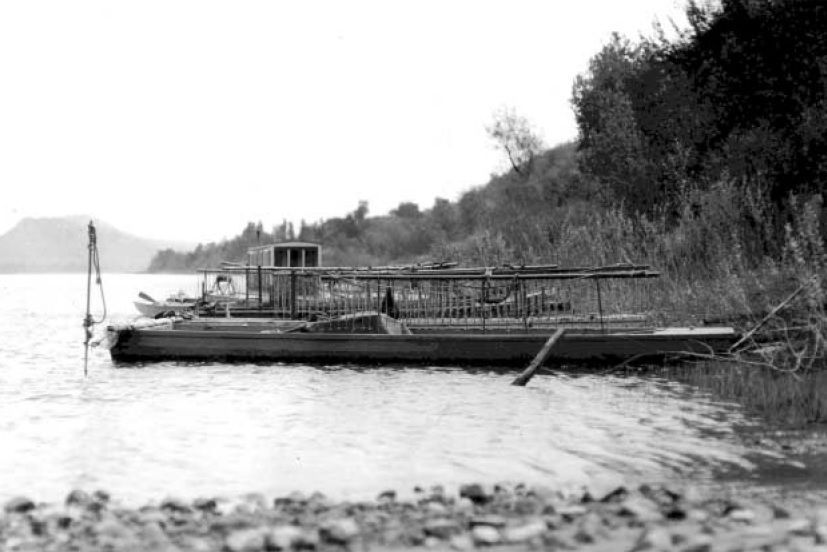
Expansion came almost overnight. The market for the buttons seemed unlimited as did the supply of shells. Fisherman gave it their nets, farmers quit farming, and clerks left their counters. It was like a gold rush. Clamming boats became the most common boats on the river. Some hard-working fishermen would gather a ton of shells in a day. As one bed was cleaned out or no longer profitable, the clammers pushed northward, always finding new wealth and more pearls to add to the thrill. Pearls rolled on bars in payment for their drinks.
Lake Pepin became the greatest mussel fishing grounds on the river. Its bottom was an ideal spawning grounds. The Bureau of Fisheries, after surveys, was convinced that the industry was doomed unless artificial aid could be secured. A plan of artificial infecting host fish was tried. Each species of fish was a host to certain species of mussel. The valuable niggerhead mussel was found only of the skipjack—a fish now missed on the upper river.
Much work in this field done at Fairport station in this way by men like A. F. Shira who explored the possibility of producing pearls artificially.
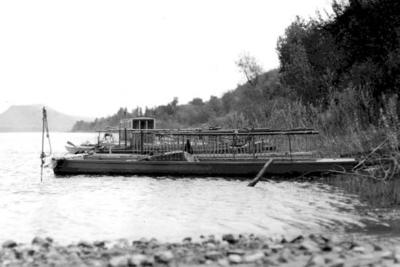
Pollution from the large cities; the changes made in the river by the nine-foot channel; and manufacturing of artificial pearl buttons caused the colorful clammer, with his little bag of pearls, his squatter family, and his strange craft to vanish from the river.
Like the floating rafts of logs, the sawmills, wheat cargo boats, the packets with their colored roustabouts singing as they unloaded their sacks, the clammer has left his impression on the upper river region — a spoiler who reaped his harvest and moved on to seek new fields.