
Before the turn of the century, during the thriving logging days, the Mississippi riverfront community of Reads Landing was a wild and woolly town teeming with saloons, hotels and "rafters."
Settled originally as a convenient point for fur traders the village later became a steamboat center of exchange for the lumber trade of Western Wisconsin.
The tiny settlement is colorful and picturesque, both in its location on the widening Mississippi at the foot of Lake Pepin amid the towering bluffs in which its homes are nestled and in its history, which reads like the saga of the river. Its population, which was 1,870 in the latter part of the last century during the logging days has dwindled to an unofficial 200 persons today.
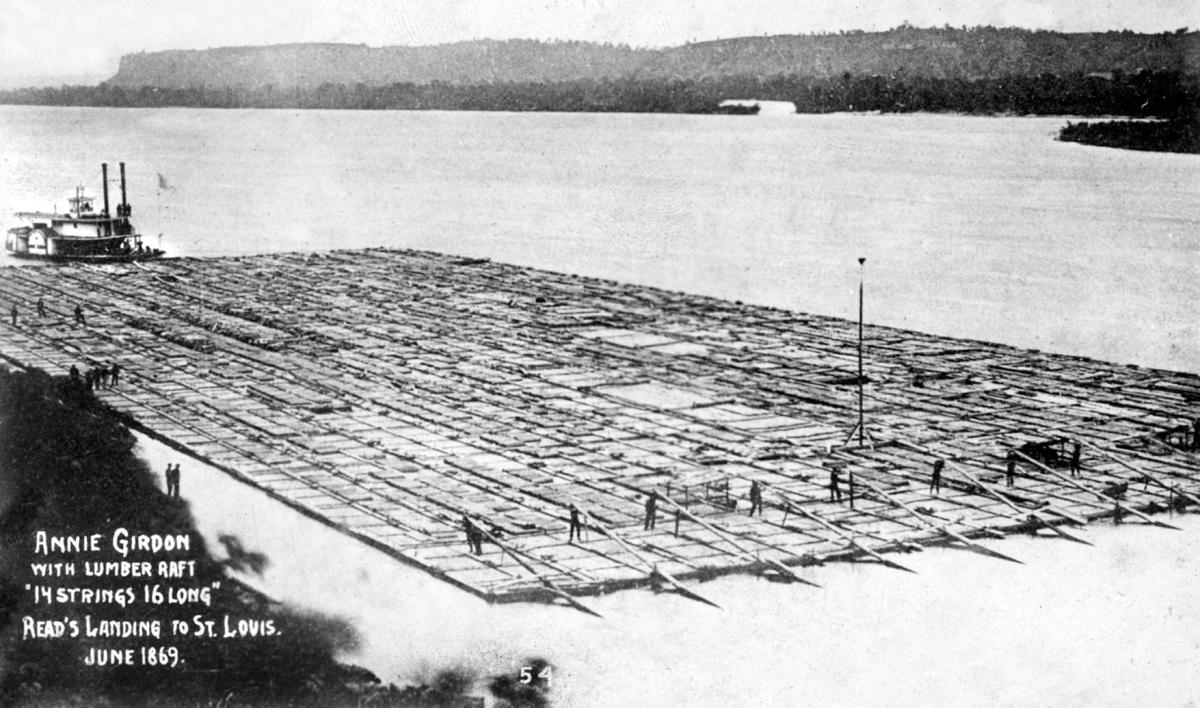
In its day, the levee was the scene of bustling activity, with as many as 400 raftsmen waiting for Chippewa floats to be made into rafts. Many steamboats were tied to the wharves. Several stores, 19 hotels and 22 saloons lined both sides of Water Street.
People are also reading…
Because of its location at the junction of the Mississippi and Chippewa rivers, Reads Landing was a convenient meeting place for all river travelers, both Indians and white men. Above the town, the Mississippi River broadens out into the; beautiful waters of Lake Pepin. Both the Chippewa and the Dakota (Sioux) Indians liked to gather on the shores of Lake Pepin and many Indian legends are associated with this place. The currents of the Chippewa carried fur-laden canoes in the early days and later carried rafts of logs cut by Wisconsin lumbermen.
In-the early 1800s Augustin Rocque, a Scotch - French Canadian, went up the Mississippi from Prairie du Chien and built a shanty on the river bank at what now is Reads Landing. He traded merchandise for furs with the Sioux and Chippewa Indians for almost 20 years, until age compelled his retirement. The place was known as Hudson's Landing from 1840 to 1845 when an Englishman, Edward Hudson, took up the location abandoned by Rocque. Hudson's widow later married Lewis Rocque, son of Augustin Jr., and the post again came into possession of a Rocque after 25 years.
History records that in 1847 Lewis Rocque sold his trading post to Charles R. Read, an adventurous English soldier-of-fortune who had occupied a trading post at Nelson's Landing across the Mississippi on the Wisconsin shore. The place then became known as Reads Landing.
In 1850 a post office, the first in the state, was established, with Read as postmaster.
Fordyce S. Richards established a trading post in 1850. Five years later he built his storeroom and warehouse on the northwest corner of Water and Richards streets. The following season Knapp, Stout & Co., one of the heavy lumber, firms of the-Chippewa Valley, built a store on the west of the Richards store. A hotel was built in 1854. Later another hotel, the Bullard House, was erected. From 1859 to 1865 it was known as the, best hotel on the river. At the close of the Civil War, Reads Landing had become an active center of trade.
The settlement achieved its first importance as a fur trading center. Later it became an important stop over point for steamboat traffic.
In. the steamboat days of the 1850s and 1860s the period of about two weeks in the early spring between the opening of the Mississippi River and the opening of Lake Pepin changed the hamlet into an active metropolis.
The steamers arriving from below, loaded with northbound passengers, were impatiently awaiting the opening of the lake. Bets would accumulate, and the money was freely wagered daily on the question of an opened or closed lake within a given period.
The building of the Chicago, Milwaukee & St. Paul Railway along the Mississippi in 1871 robbed Reads Landing of its importance as a steamboat center. It still continued as a busy center of supplies for the lumbermen of the Chippewa Valley. This business was taken away by the building of the Chippewa Division in 1882.
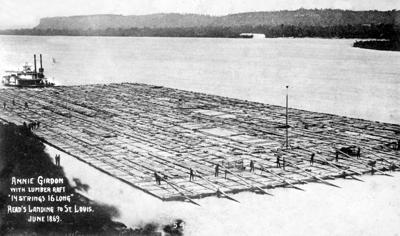
At the height of the logging days logs were floated downstream in such numbers that a person was able to walk across the river on them from Reads Landing to the Wisconsin side. It was a common occurrence to see someone killed and thrown into the river, said an old-timer, when describing the enmity between the rafters who worked for the logging companies and the steamboat employees. In the summer when they met at Reads Landing, especially after visits to any of the numerous saloons, the result was usually a free-for-all fight.
Today Reads Landing remains in all its scenic beauty as a tourist attraction and mecca for fishermen with its rich heritage proudly remembered by all its residents, past and present, as well as students of Minnesota history.
Jerome Christenson is deputy editor at the Winona Daily News, which means he does just about anything that needs doing whenever somebody needs to do it. You'll see his name attached to a regular column, historical features, news stories and other accounts of odd happenings around town and around the area. His phone number is 507-453-3522 -- leave a message if he's not around -- or email at jerome.christenson@winonadailynews.com.