


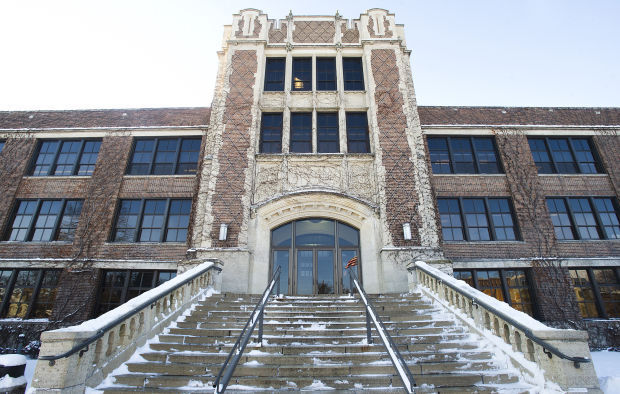
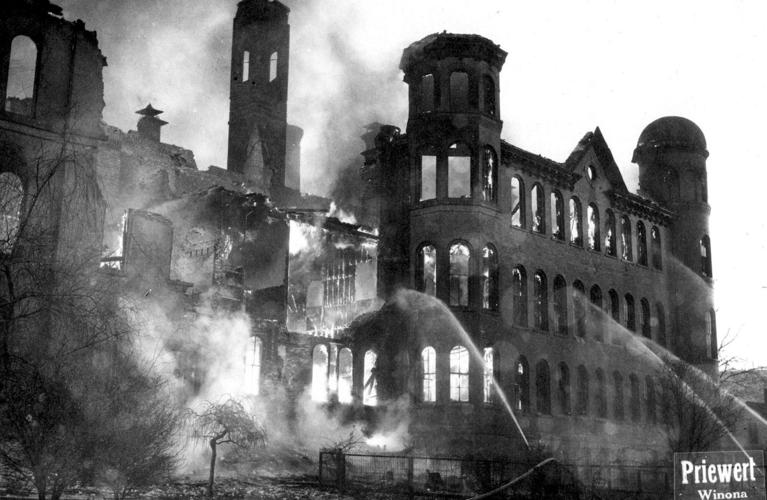
A rose by any other name may smell as sweet, but recently, the wrong name on a campus building will raise a stink.
In recent years, students on college campuses coast-to-coast have been raising objections to the names bestowed upon the buildings in which they attend class.
At Princeton, student have demanded the Woodrow Wilson School for International and Public Affairs be stripped of the name of the former president of Princeton and the United States for his lifelong, steadfast and outspoken racism. On the west coast, Stanford University students have protested that buildings and landmarks named in honor of Junipero Serra, the 18th century missionary and recently canonized saint, arguing his work contributed to assimilation and exploitation of California’s Native Americans.
What, then, of the buildings on Winona State University’s campus?
People are also reading…
What manner of nefarious deeds lurk behind the names Somsen, Gildemeister, and Phelps?
Well, Stephen H. Somsen was a lawyer...
But shortly after his death, the following tesimonial was offered in his behalf by his colleagues: “He was an individualist with qualities clearly defined —intelligence, independence, industry, accuracy, frankness, courage, honor, fidelity and sound judgement. He had a keen sense of humor and a rugged philosophy of life. He was tender toward the infirm and aged. His regard for individuals depended upon his estimate of character rather than upon station in life. There were many acts of kindness or remembrance on his part, nearly always known only to himself and the recipient...”
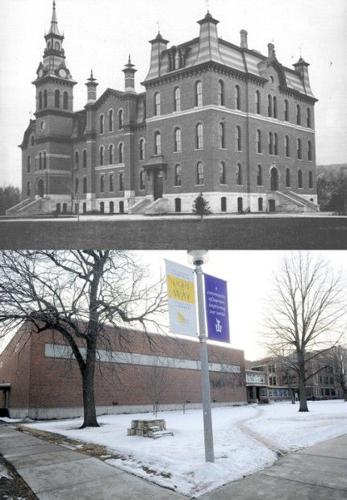
He served on the Minnesota State Teachers College Board from 1909 to 1933, and in 1937, the year after his death, it was decided to name “College Hall,” built after Old Main was leveled by fire in 1922, in his memory.
With the exception of Pasteur Hall — named for Louis Pasteur, the French scientist who developed vaccines for rabies and anthrax and the process for making milk safe to drink — and the Performing Arts Center — clearly named for no one — when it came time to name the buildings on the Winona State main campus, those responsible didn’t look much farther than the Winona City Directory.
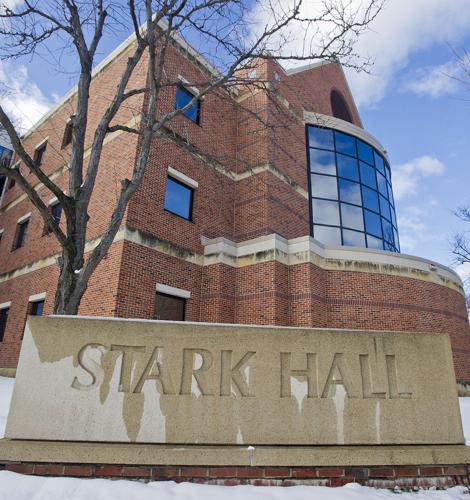
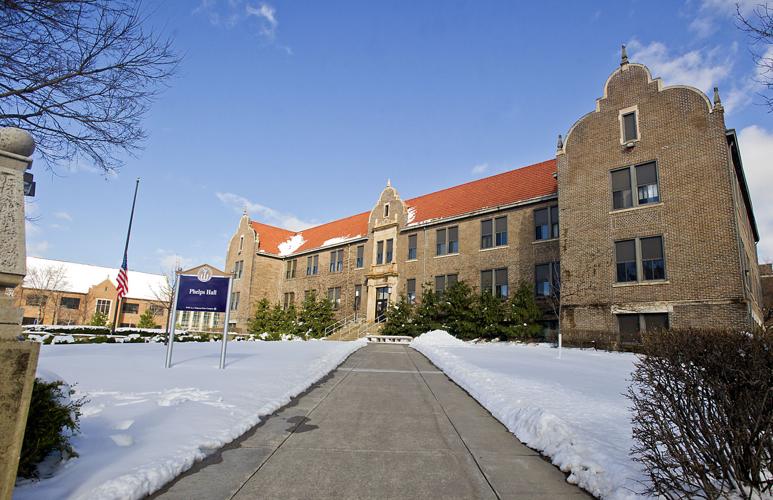
Six times the college or university presidency has been the route to architectural immortality. The Krueger Library, Stark Hall, Minnè Hall, Maxwell Hall, Shepard Hall and Phelps Hall carry the names of presidents Darrell Krueger, Thomas Stark, Nels Minnè, Guy Maxwell, Irwin Shepard and the second man to head the institution, William Phelps — who had the more modest title of Principal.
In other cases, the accomplishments that earned them notice have faded from popular memory.
Consider Miss Theda Gildemeister, faculty member from 1898 to 1934. In the era of the Little Red Schoolhouse she was among the state’s leading experts in rural education, her book “Minnesota Course of Study for Elementary Schools and Manual for Teachers” a best-seller in its field.
She served as president of the Minnesota Education Association, and in 1964 gave her name to the classroom building that housed the college’s department of education. After that, she was pretty much forgotten.
Likewise, Erwin Shepard is best known to contemporary students as one-quarter part of The Quad — the Morey-Shepard-Richards-Conway residence hall complex bounded by King, Huff, Sanborn and Winona streets.
In life, Shepard was a bit more than a quiet academic, although he did found the National Education Association, serving as national secretary from 1893 to 1912.
On the night of Nov. 20, 1863, during the siege of Knoxville, Tenn, Corporal Shepard led a party of three men to put to the torch a house used by Confederate sharpshooters to harass Union lines and in the ensuing action earned the Congressional Medal of Honor.
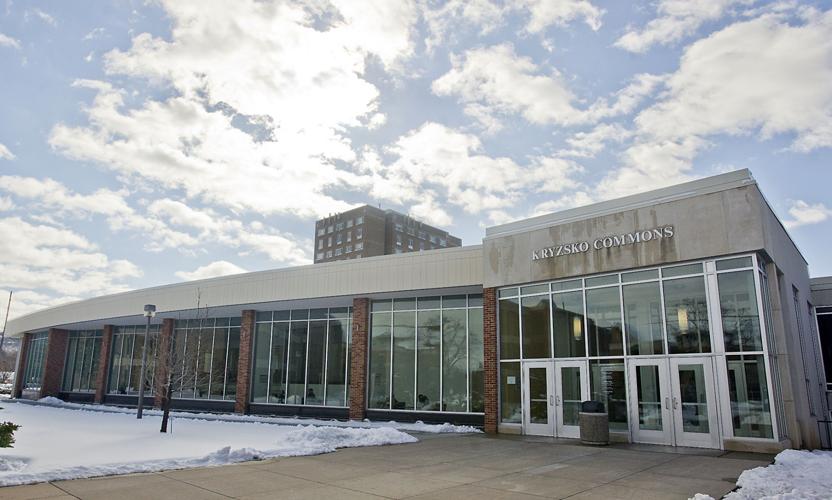
Perhaps the closest to controversial among Winona State’s building namesakes is S.J. Kryzsko, Winona banker and 15-year member of the Minnesota State College Board, serving as president from 1957 to 1961. In that role, Kryzsko made a lasting contribution to the statewide system, promoting the use of revenue bonds to finance residence halls, student unions and other non-academic buildings.
Consequently, when ground was broken for a student union at Winona State, it seemed well and fitting to christen it Kryzsko Commons.
And its mid-20th century look is appropriate for another reason: Kryzsko was no fan of old buildings. In Winona he was a leading advocate of “the clean fresh look, which is a potent factor in attracting retail customers for our merchants and payrolls for our labor force.”
“Everywhere we travel we find constant change in city after city where they are tearing down the old outmoded buildings of another era and erecting instead the new modern buildings which are evidence of present day growth and progress,” Kryzsko wrote in 1956.
Kryzsko, it should be noted, went on to lead the fight to tear down the old post office, and led the charge for urban renewal that resulted in architectural gems such as the Plaza Square, Wells Fargo downtown, and the Cine 7.
“Fashions change for the civic look as well as for women. What woman today would come out wearing the fashions of yesteryear?” he asked. “Would you like it if she did?”
Jerome Christenson is deputy editor at the Winona Daily News, which means he does just about anything that needs doing whenever somebody needs to do it. You’ll see his name attached to a regular column, historical features, news stories and other accounts of odd happenings around town and around the area. His phone number is 507-453-3522 — leave a message if he’s not around — or email at jerome.christenson@winonadailynews.com.


