


Wow! It is hard to believe that 50 years has passed since we battled the flood of 1965!
Fifty years ago, I was a sophomore at Winona Senior High and had just celebrated my 16th birthday at the end of March. Shortly after my birthday, I recall an announcement at school one morning that any boys over 16 could help with flood duty and sandbag. I, like many others from Winona High, Cotter, Winona State, Saint Mary’s and the vocational school answered the call.
We reported to the unemployment office early in the morning, signed up, and were immediately trucked to Prairie Island to begin an eight-hour shift of sandbagging. We were given gloves and a shovel. Those of us who worked for the city were paid $1.50 an hour and those that were hired on by the Corps of Engineers were paid over $3 an hour if I recall. Few of us were used to the long, hard work ahead, but we all knew the price to be paid if we did not keep the dike higher than the rising water. It was dirty, backbreaking work and if one didn’t wear gloves; blisters would fast appear on the hands. The Red Cross would come around during the day with coffee, milk, water, doughnuts and sandwiches. They did a great job keeping all of us nourished.
People are also reading…
My older brother sandbagged a few days, but then had to leave for Navy boot camp at Great Lakes, Ill. My uncle was very ill so my dad also left Winona and went to Milwaukee to help him. Before he left, though, he and I put all of his tools and other household items of value in our attic. We lived on Johnson Street, between Mark and Howard streets, and it was predicted that our house would have over six feet of water in it if the dikes broke. We were all very worried!
So, it was just my mom and me left to protect the house and help fight the flood.
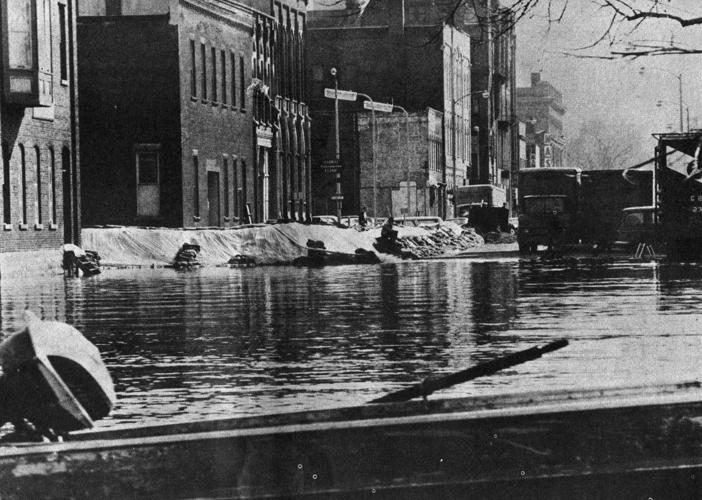
One afternoon, after four or five days of sandbagging on Prairie Island, someone came along and asked for volunteers to work another shift in a different spot. I volunteered along with many others, and we were trucked to Fifth Street to build a buffer dike right down the middle of the street.
A number of portable generators were set up and running to operate floodlights so all of us could see what we were doing. It was quite the show, but we worked all night and put up a dike about 5 feet high for many, many blocks. After a full day and night of nonstop sandbagging, I was exhausted and slept much of the next day. In the afternoon, my mom and I drove up to Garvin Heights and surveyed the city below us. It was quite the sight to behold!! Laid out below us on the Mississippi Valley floor was a lot of water and not a lot of land. Winona truly was an island! It was downright scary looking down at the long, thin line of the Prairie Island portion of the dike. Not much stood between disaster and safety.
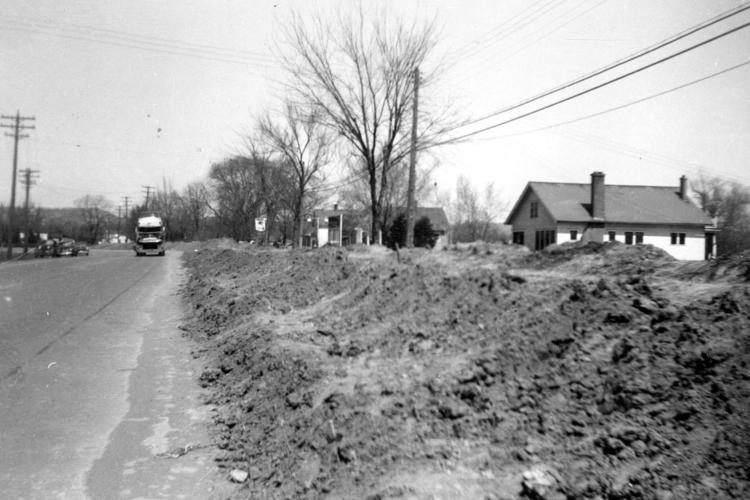
The next day I reported for duty again and was trucked off to Mankato Avenue to sandbag along Shive Road. One of our tasks at that location was to position sandbags on top of where burbles were taking place in the dike. As these hotspots were located we would fill sandbags like heck and toss them into the area where the burble was.
We did a lot of sandbagging at the intersection of Mankato Avenue and Sarnia Street where there were large pipes pumping water out of Lake Winona and into County Ditch #4. The height of the water in County Ditch #4 along Shive Road was nearly 10 feet higher than Lake Winona! I sandbagged at this location and along Shive Road for the next nine days and all told, worked over two weeks doing my part to help save Winona.
Interestingly, my dad called one day from Milwaukee and said he saw me on television sandbagging! I remembered several TV crews filming us, but didn’t think much about it at the time, as we were all too busy with the task at hand.
I feel very fortunate to have been able to live my entire life in Winona. I have been doubly fortunate to be able to enjoy a rewarding career in my hometown. But being able to play a part in the most significant event in the history of Winona gives me a satisfaction that no amount of money can buy!